A Real Dietitian or Artificial Intelligence?
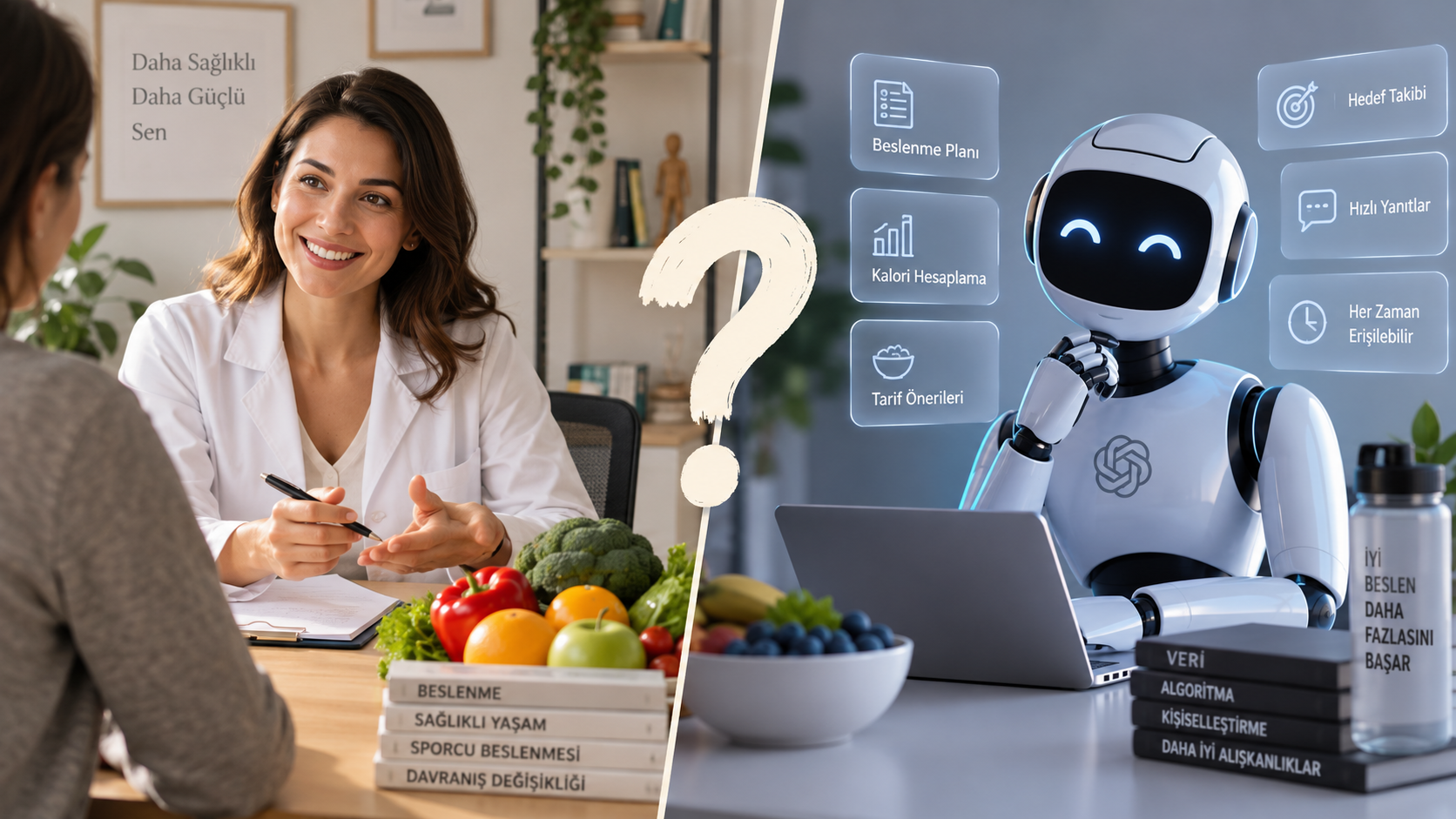
Booking an appointment with a dietitian, attending a consultation, explaining your eating habits, and waiting for a personalized nutrition plan. Or simply opening your phone, typing a few sentences into an AI assistant, and receiving a meal plan within seconds.
The second option sounds pretty appealing. And artificial intelligence is no longer limited to providing general information. It can estimate daily calorie requirements, create weekly meal plans, evaluate protein intake, and suggest recipes based on whatever ingredients you have at home.
So, with technology capable of doing all this, do we still need a human dietitian?
The answer depends on what kind of nutritional support you're looking for. Creating a good meal plan and managing someone's nutritional health are two different things. At the same time, not every question about food requires a clinical assessment.
Can AI Really Work Like a Dietitian?
In certain areas, yes. In fact, it can be surprisingly effective.
Imagine you run four days a week, you're not trying to lose weight, but you'd like to increase your daily protein intake. You tell an AI assistant your height, weight, activity level, and dietary preferences. Within seconds, it can prepare a sample daily meal plan.
Then you mention that you can't consume dairy products. The plan changes. You explain that you usually eat lunch at work. New alternatives appear. You add that you're working with a limited budget. More affordable options are suggested.
This flexibility is a significant advantage. With a traditional nutrition plan, even small adjustments might require another consultation. With AI, you can explore alternatives almost instantly.
However, there's an important detail to consider. AI works with the information you provide. If that information is incomplete, inaccurate, or doesn't reflect your actual circumstances, the resulting plan may be unsuitable for your needs, regardless of how detailed it looks.
Where Artificial Intelligence Performs Well
Available Whenever You Need It
Maybe you want to plan tomorrow's meals at eleven o'clock at night. Perhaps you're standing in a supermarket comparing the nutritional values of two products, or you've just finished a run and want to know what to eat afterward.
AI doesn't have office hours. Its ability to respond immediately makes it particularly useful for everyday nutrition planning.
Cost and Accessibility
Regular appointments with a dietitian aren't affordable for everyone. Depending on where you live, finding a qualified specialist may also be difficult.
AI tools offer free or relatively inexpensive options. For someone who wants to learn about basic nutrition, discover meal alternatives, or organize grocery shopping, this can be a meaningful advantage.
Tracking Eating Habits
With suitable applications and consistent data entry, AI can help analyze daily food records. It may identify frequently skipped meals, limited variety in protein sources, or days when vegetable consumption tends to decrease.
And the analysis doesn't have to revolve entirely around calories. You can also explore dietary variety, convenience, affordability, and how well your eating habits fit your daily routine.
Generating Fresh Ideas
Tired of eating the same breakfast every morning? Only have eggs, lentils, and a few vegetables in the kitchen? Interested in experimenting with plant-based protein sources?
AI can be particularly useful for these everyday challenges. For people who struggle to decide what to cook, it can serve as a practical source of inspiration.
Where Does AI Fall Short?
One of the biggest challenges is that a convincing answer isn't necessarily an accurate one.
AI can make mistakes when calculating calories, estimating portion sizes, or recommending foods for people with specific health requirements. And sometimes, it delivers those recommendations with remarkable confidence.
For example, an AI application might estimate the calories in a plate of pasta from a photograph. But the image may reveal very little about the amount of oil used, the ingredients in the sauce, or the actual weight of the serving.
Similarly, two people can be the same age, height, and weight while having very different nutritional needs. Their medical histories, medications, physical activity levels, and individual circumstances may require completely different approaches.
Data privacy is another consideration. Nutrition applications may collect sensitive information, including medical history, medication use, laboratory results, and personal habits. Before sharing these details, it's worth reviewing how the service handles and stores your information.
What Makes a Human Dietitian Different?
A dietitian's work involves much more than counting calories or preparing a weekly menu.
A qualified dietitian considers medical history, lifestyle, eating behaviors, and relevant laboratory results when developing nutritional recommendations. They also monitor whether the plan is practical, evaluate progress, and adjust their approach when necessary.
Consider someone who regularly overeats in the evening. Simply recommending a lower-calorie dinner might fail to address the underlying problem. Inadequate food intake earlier in the day, irregular working hours, stress, or other factors may influence this behavior.
A professional can explore these possibilities during a consultation and develop a more comprehensive approach.
The human relationship itself can also be valuable. For some people, regular appointments, feeling understood, and having someone guide them through a gradual process make it easier to change long-established eating habits.
Personalized professional support becomes particularly important for people managing diabetes, kidney disease, food allergies, pregnancy-related nutritional needs, eating disorders, or other medical conditions. In such situations, a dietitian may work alongside a physician or other healthcare professionals.
Human Dietitians Have Limitations Too
The value of human expertise doesn't guarantee that every consultation will be equally effective.
Dietitians differ in their experience, professional approaches, and communication styles. A method that works exceptionally well for one person may be unsuitable for another.
Some nutrition programs may also fail to accommodate everyday circumstances. Strict meal plans, expensive ingredients, and overly complicated rules can make long-term adherence difficult.
Finding available appointments, making time for consultations, and paying for ongoing support can create additional obstacles.
Professional qualifications are important, but they don't automatically guarantee that every recommendation reflects the latest scientific evidence. When choosing a dietitian, professional credentials, scientific reasoning, communication skills, and attention to individual needs all deserve consideration.
What Does Scientific Research Say?
Research examining the effectiveness of artificial intelligence in nutrition has produced some interesting findings.
A systematic review published in 2025, which examined 23 studies, identified significant potential for ChatGPT in generating meal plans and dietary recommendations. In several studies, AI-generated suggestions achieved satisfactory levels of accuracy, and some assessments found them difficult to distinguish from recommendations prepared by human dietitians.
However, the same review also highlighted safety concerns and the limited evidence available about how these systems perform in real-world situations.
Another study published in 2025 compared dietary plans prepared by ChatGPT and dietitians for people with chronic health conditions. The researchers identified shortcomings in the AI-generated plans, including difficulties meeting energy and nutrient targets and occasional recommendations of unsuitable foods.
These different findings reveal an important pattern. AI performance varies depending on the task, the model being used, the information provided, and the methods used to evaluate the results.
A system that performs well when generating general dietary suggestions may struggle when asked to develop a nutrition plan for someone with a complex medical condition.
What About Runners and People Who Exercise Regularly?
For physically active people, the comparison becomes especially interesting.
Imagine you run five kilometers three times a week. You generally eat a balanced diet and simply want to discover better meal options for your training days.
AI can suggest different breakfast ideas, explain the roles of carbohydrates and protein in exercise, recommend convenient recipes, and help organize your grocery shopping.
But what happens if you regularly experience dizziness while running, lose weight unexpectedly, notice a significant decline in performance, or feel constantly exhausted?
At that point, finding the right recipe is no longer the main concern.
A medical evaluation, followed by guidance from a dietitian experienced in sports nutrition when appropriate, becomes a more sensible approach.
For athletes training intensively or preparing for competitions, inadequate energy intake, poor recovery, and nutrient deficiencies can affect both performance and long-term health.
Can You Use Both Together?
Actually, combining the two might be one of the most interesting options.
You could work with a dietitian to establish a nutrition strategy suited to your health and personal goals. Then you could use AI to generate recipes, affordable shopping lists, and alternative meals that fit within that strategy.
For example, you might share the nutritional targets established by your dietitian with an AI assistant, provided you're comfortable sharing that information. The assistant could then suggest different meal combinations, which you could review with your dietitian when needed.
This approach combines professional judgment with the speed and flexibility of modern technology.
Of course, using both services isn't necessary for everyone. Someone with no particular health concerns who simply wants to diversify their everyday meals may find AI useful enough on its own.
How to Get Better Nutrition Advice From AI
The quality of an AI response often depends on how you ask the question.
Instead of simply typing "Create a diet plan for me," try describing your goals, activity level, food preferences, daily schedule, and budget.
The more relevant context you provide, the easier it becomes for the system to suggest practical options.
You can also ask AI to estimate nutritional values, explain the assumptions behind its calculations, and clearly identify information it isn't confident about.
Be particularly cautious with suggestions involving extremely low-calorie diets, rapid weight-loss promises, excessive supplement intake, or eliminating entire food groups.
Understanding the reasoning behind a recommendation should come before following it.
So, Who Should We Trust?
Perhaps the most interesting part of this debate isn't which tasks artificial intelligence will eventually take over from dietitians. It's understanding what people actually need when they seek nutritional guidance.
Not everyone needs regular appointments with a specialist. Sometimes we simply want to prepare more interesting meals, simplify grocery shopping, or understand a particular aspect of nutrition.
At other times, we need someone who can listen, assess our health, and support us through a meaningful long-term change.
AI can already address many needs in the first category. Human expertise becomes considerably more valuable in the second.
In the coming years, dietitians will likely incorporate more AI tools into their work, while AI systems themselves become increasingly capable and reliable. Together, these developments could make nutrition guidance more accessible and personalized.
For now, the most practical approach is to understand where each option offers the greatest value rather than treating them as competitors.
Because sometimes, a good algorithm is all you need to plan dinner. And sometimes, before sitting down at the table, what you really need is a conversation with another human being.