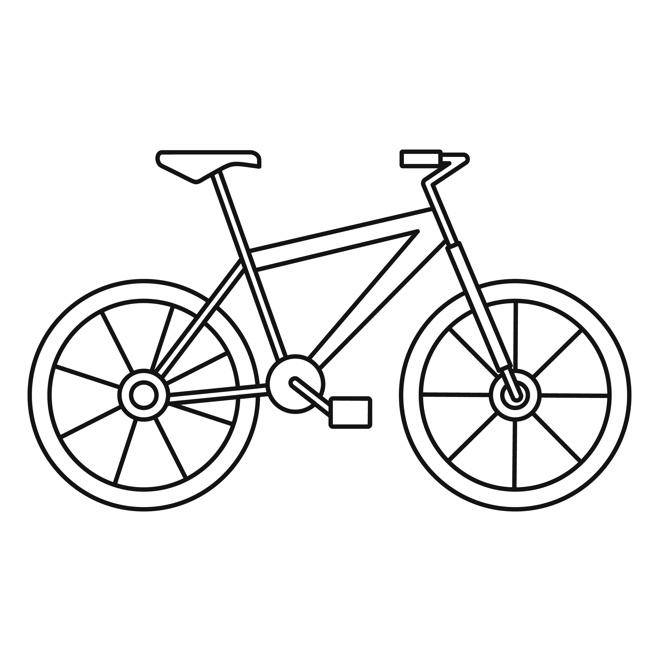
Start with how you plan to ride
Buying a used bike is not about finding the most expensive brand or the model with the most gears. Your first goal is to choose a bike that suits your needs, fits you and is safe to ride. Shiny paint and extra accessories cannot make up for mechanical problems.
Think about where you will ride. For short trips on paved roads, a mountain bike may not be the right choice. For rough surfaces, do not choose a bike with narrow tires based on looks alone. Consider your usual routes, whether you will carry the bike upstairs and whether you need to transport belongings.
Do not spend your entire budget on the purchase price. Leave room for servicing, tires, brake parts, a helmet, a lock and lights. A cheap bike can stop being a bargain once essential repairs are included.
Ask useful questions before arranging a viewing
Get a few basic details from the seller before traveling to see the bike.
- Brand, model and year of manufacture, if known
- Frame size
- How long it has been used and why it is being sold
- Known faults and replacement parts
- Any crashes or significant impacts
- Work carried out during its most recent service
- Any available purchase receipts and service records
Ask for photos of the whole bike, plus close-ups of the chain, gears, tires and frame joints. Photos cannot replace an in-person inspection, but they may help you spot obvious problems early.
A seller who answers openly is encouraging, but that alone is not a guarantee. Missing paperwork does not automatically make a bike suspicious. However, an apparently removed serial number or conflicting explanations about ownership are serious reasons to walk away.
Check more than the saddle height
Adjusting the saddle cannot always make an unsuitable frame fit. Two people of the same height may have different body proportions. Use the manufacturer’s sizing guide as a starting point and try the bike if possible.
When seated, do you have to stretch too far to reach the handlebar? Can you comfortably reach the brake levers? Can you stop and get off safely? Check these things rather than relying on the size label alone.
If the saddle or handlebar needs to be adjusted beyond its safe limits, consider a different frame size. Ask a bike mechanic for help if you do not know those limits.
Put safety first during the inspection
Meet somewhere well lit and safe, with enough space to inspect the bike. If possible, bring someone who knows about bicycles. You do not have to make a decision because the seller is rushing you.
Frame and front fork
The frame is the main structure of the bike. The front fork holds the front wheel. Look for cracks, obvious bending, deep dents or questionable repair marks, especially around joints.
It is not always easy to tell a surface scratch from structural damage. If you suspect a crack, do not test ride the bike or buy it without a professional inspection. Damage to carbon parts may not be visible. Appearance alone is not enough when a bike’s history is unclear.
Wheels and tires
Spin the wheels and watch for a noticeable side-to-side wobble in the rim. Look for missing or broken spokes and cracks, cuts or bulges in the tires. Do not ride if you are unsure whether the wheels are securely attached.
A flat tire does not necessarily mean a major problem. However, you cannot properly assess it until it has been inflated and checked to see whether it holds air.
Brakes and steering
While walking the bike slowly, test each brake separately. Each should stop its corresponding wheel. A lever that reaches the handlebar, very weak braking or fluid leaking around brake components needs attention.
The handlebar and front wheel should turn together consistently. If anything feels loose, catches or has noticeable play, postpone the test ride. Brake noise alone does not tell you what is wrong.
Chain, gears and pedals
Heavy rust, stiff chain links and missing or broken gear teeth deserve attention. You cannot reliably judge chain wear by appearance alone. A mechanic can check it with a suitable measuring tool.
Turn the pedals and feel for catching or looseness. These symptoms can come from different components. Do not assume an unknown problem will be fixed with a quick adjustment.
Take a short test ride
If the initial checks reveal no safety concerns, ask the seller for permission to take a short ride. Wear a helmet and choose an area away from traffic. Remember that a visual inspection cannot uncover every fault.
- Test the brakes gently and under control at low speed.
- Shift through the gears without pushing hard on the pedals.
- Watch for the chain skipping or gears failing to change.
- Notice handlebar vibration, unexpected changes in direction or repeated knocking.
- Make sure you can comfortably stop and start again.
Stop if something feels wrong. Do not accept an unsupported reassurance that the behavior is normal.
Work out the total cost before paying
If possible, arrange an inspection and repair estimate from an independent bike shop before buying. Hidden costs can matter particularly with expensive bikes, carbon frames and suspension systems. Electric bikes also need specialist assessment of the battery and motor.
Add necessary servicing and replacement parts to the asking price, then compare the total with similar bikes in comparable condition. Keep a written record of the sale, including the date, price, bike details and serial number. Remember that this record does not prove ownership by itself.
The best used bike is not necessarily the cheapest listing. It is one that fits you, has no unresolved safety concerns and stays within your budget once repairs are included. If you are unsure, choosing not to buy is a sensible decision too.